A Designer’s Real-World Review of Protection Outline
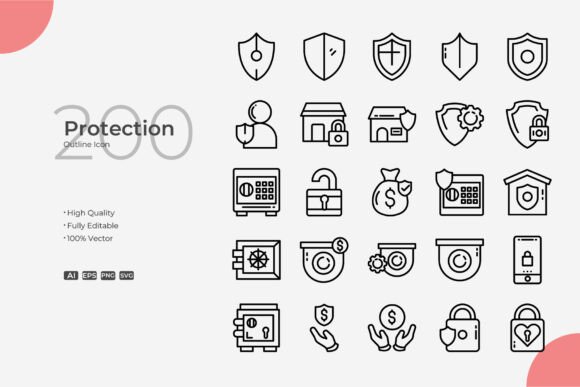
Let’s talk about Protection Outline—not as a digital icon set on a screen, but as a design you’re about to embroider onto real fabric. I’m looking at this collection through the lens of someone who stitches for clients, for my own small shop, and for gifts that need to feel special. The promise here is a set of 200 icons, simple and clean. My first task is to picture them not as pixels, but as stitches.
The Immediate Mood: Clean Versatility
When you open this design file, the first impression is one of quiet utility. These aren’t overly decorative or fussy icons; they’re functional outlines with a straightforward personality. That’s a significant advantage for embroidery. A clean, simple design translates into clearer stitching, fewer potential thread breaks in tiny details, and a final product that looks intentionally crafted, not accidentally cluttered. The mood it creates is modern, slightly minimalist, and incredibly adaptable. It feels like a design system rather than a single statement piece.
This visual personality naturally belongs to projects where clarity and recognition are key. Think of a custom embroidered tote bag for a local business—a simple, clean icon representing their service speaks louder than a complex logo on a textured fabric. Or a baby’s blanket with a gentle, outline-style animal icon; it feels sweet without being overly bold. The layout of individual icons, being isolated elements, means you can pick and place without worrying about compositional balance within the design itself. Your job becomes curating which icon fits the product.
Where Protection Outline Excels in Embroidery
In real-life embroidery situations, this set’s strength is its range. With 200 icons, you have a library for almost any themed product. Let’s walk through a scenario.
Imagine you’re preparing a batch of embroidered tea towels for a holiday market. You want a cohesive set—maybe a pine tree, a gift box, a star, a snowflake—all with the same visual weight so they look like a family when displayed together. Protection Outline offers that consistency. Each icon shares that simple outline character, so stitching them in the same thread color and at the same size on your towels creates a professional, boutique-ready collection.
For custom apparel, like a well-made sweatshirt, a single, medium-sized icon from this set embroidered on the chest or sleeve can elevate a basic garment. It becomes a thoughtful, personalized gift. For patches, the clean lines mean the edges of your satin stitch borders will be sharp, and the fill stitches inside the outlines (if you choose to add them) will lay flat. On caps, where the curved surface can distort busy designs, a simple outline often performs better, holding its shape.
It also extends beyond the hoop. These icons, because they are described as perfect for digital uses, become invaluable assets for your craft business. Use them in printable mockups for your Etsy listings to show how the embroidery will look on a tote bag or apron. They can help maintain brand consistency across your digital shop front and your physical embroidered products.
Careful Application: Where Simplicity Needs Support
While versatility is high, there are places where even a simple outline design requires careful planning. The “simple and clean” description is encouraging for small-scale work, but you must still be vigilant.
On very small hoop sizes—think delicate baby clothes or the corner of a pocket—the inherent simplicity helps, but you must inspect the digitized file’s small details. Are the corners of an icon sharp enough that a single running stitch won’t blur them? Test on scrap fabric first.
Textured fabrics like thick towels or sweatshirt fleece can absorb a clean outline, making it look less distinct. Here, thread color contrast is crucial. A white outline on a dark navy sweatshirt will pop; a light grey on a cream linen might vanish. Always check your contrast.
On stretchy fabrics or dark fabrics where you might use a lighter thread, the stitch density needs to be sufficient to prevent the design from looking sparse or fragile after washing. The product description mentions editing stroke weight—this is a critical point. If you can adjust the outline thickness in the digital file before exporting for your machine, you can tailor it for these tricky fabrics, making it slightly heavier for durability on a frequently washed kitchen apron.
Also, consider the product’s end-use. A detailed, dense floral embroidery might not suit a corporate branded polo shirt, but a clean, professional icon from this set? That fits perfectly, enhancing the garment’s value and the client’s trust in your professional execution.
Practical Notes from the Worktable
Before you load this embroidery file, a few real-world reminders.
- Always, always test the design on a scrap of the actual project fabric first. This tells you everything about how it stitches out.
- Review the stitch density in your software preview. Simple outlines can sometimes be digitized with very low density, which might not hold up on certain materials.
- Check your hoop size compatibility. Does the design size fit the area you have on your target product? Remember, you can resize, but do so proportionally and check the integrity of the lines after scaling.
- Inspect small details like intersecting lines or tiny enclosed spaces. These are the spots where threads might bunch.
- Create black and white mockups, or simply imagine the icon in a single color. This set is likely meant for monochromatic or limited-color embroidery, which simplifies thread choice.
- Use the proper stabilizer for your fabric. Even a simple design can puckering without it.
- A critical final step: confirm the licensing. The product is described for websites, apps, print, etc. Before selling finished embroidered items or using the icons in digital products for your craft business, you must verify the license permits commercial use of the embroidered derivative. Don’t assume.
The Final Stitch: Value Beyond the File
What does using Protection Outline ultimately do for your embroidery project and your business? It provides a foundation of clear, adaptable assets. This boosts your efficiency—you’re not designing from scratch for every new request. For customer engagement, a well-embroidered, recognizable icon on a handmade product feels both contemporary and timeless, increasing its giftability. For your brand, using a consistent style across various products—baby embroidery, holiday gifts, boutique merchandise—builds a subtle but recognizable coherence.
It moves the conversation from “Can you embroider this?” to “Which of these clean icons would suit your project best?” That’s a more confident, service-oriented position for any designer or maker. In the end, the real test of any embroidery design is how it looks after the machine stops and you hold the finished product in your hands. With its emphasis on simple, clean outlines, Protection Outline is poised to leave you holding something thoughtfully made, professionally presented, and ready for its real-world purpose.